
There are dive trips you enjoy for a week… and then there are the ones you talk about for years afterward.
Madagascar belongs in the second category.
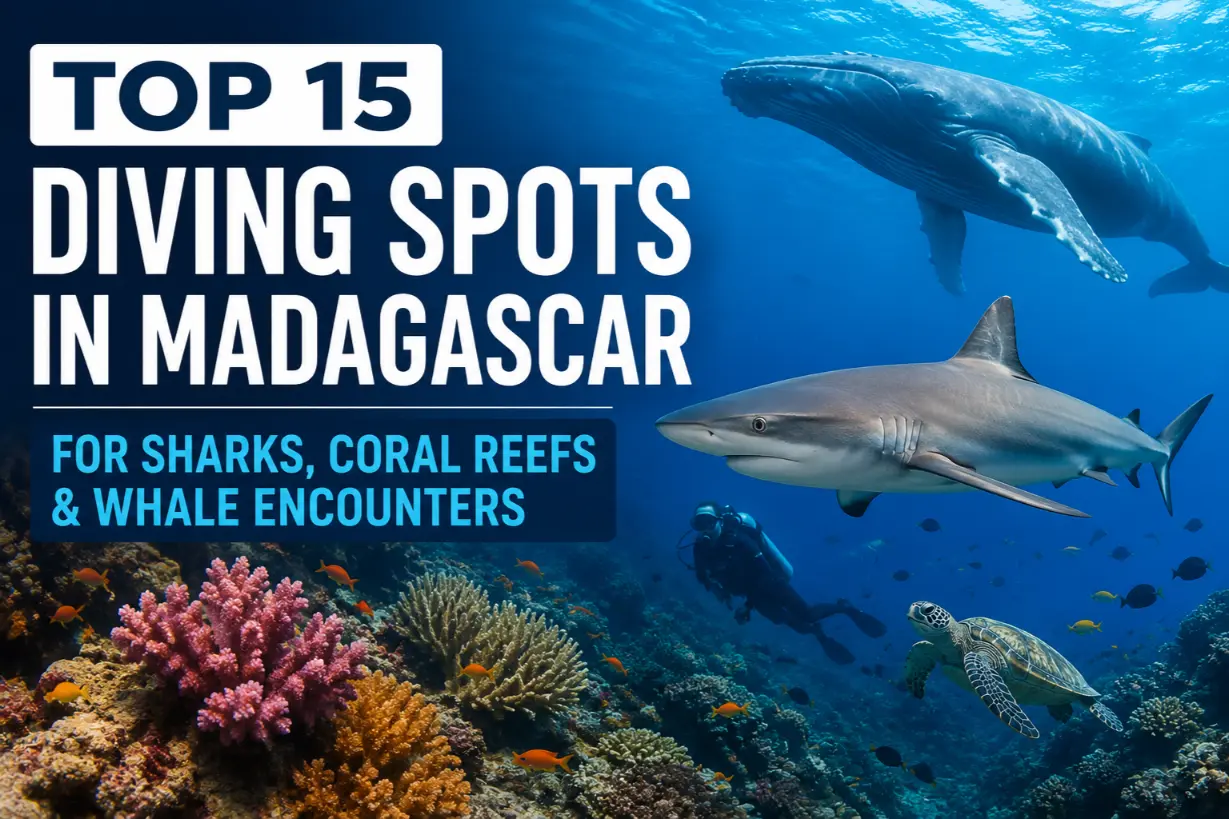
This isn’t the kind of destination where you step off a crowded speedboat with 50 other tourists waiting for the same underwater photo. Diving in Madagascar feels raw, remote, and surprisingly untouched. One day you might drift beside reef sharks in deep blue water. The next, you’re floating above coral gardens so colorful they barely look real. And if you visit during the right season, there’s even a chance you’ll hear humpback whales singing underwater before you see them.
That’s the magic of Madagascar — it still feels wild.
If you’re planning a diving trip here, these are the spots worth putting on your radar.
1. Shark Point, Nosy Be
For many divers, Shark Point is where fear turns into fascination.
Located near Nosy Be, this dive site is known for regular reef shark sightings, especially white-tip and black-tip sharks gliding calmly through open water. Despite the name, the atmosphere underwater feels surprisingly peaceful.
The visibility here is often excellent, and the current adds just enough movement to make the dive exciting without becoming overwhelming.
What makes this spot memorable isn’t just the sharks — it’s realizing how graceful and calm they actually are underwater.
2. Manta Point
There’s something almost unreal about seeing a manta ray emerge from the blue.
At Manta Point, divers often describe the experience as more emotional than adrenaline-filled. These enormous creatures move slowly and effortlessly, circling cleaning stations while divers hover nearby trying not to forget to breathe.
Conditions here are usually best during warmer months when plankton levels increase, attracting larger marine life.
If you enjoy underwater photography, this is one of the most rewarding places in Madagascar to bring a camera.
3. Gorgonian Bank
Some dive sites impress you with marine life. Others impress you with scenery.
Gorgonian Bank does both.
Massive sea fans stretch across the reef like underwater trees, while schools of fish drift through the current in every direction. The deeper sections feel dramatic and cinematic, especially when sunlight filters down through the water.
Because currents can become strong, this spot is usually better suited for experienced divers who enjoy drift diving.
4. Nosy Tanikely Marine Reserve
Not every dive in Madagascar needs to be intense.
Nosy Tanikely Marine Reserve is calm, colorful, and ideal for divers who simply want to enjoy marine life without chasing adrenaline.
The coral here is vibrant and healthy, and sea turtles are commonly spotted cruising through shallow water. Visibility is often excellent, making it perfect for beginners, snorkelers, and photographers.
What surprises many travelers is just how alive the reef feels. Everywhere you look, something is moving.
5. The Cathedral, Mitsio Islands
The first thing divers notice here is the light.
Huge rock formations rise underwater like cathedral walls, with beams of sunlight cutting through cracks and openings in the reef. It feels less like a normal dive site and more like entering another world.
The Mitsio Islands are much more remote than Nosy Be, which means fewer boats and healthier marine ecosystems.
The Cathedral is especially popular among underwater photographers because the landscape itself is so visually striking.
6. Grande Mitsio Reef
This is the kind of dive that reminds you you’re in the open Indian Ocean.
Currents sweep across the reef, pelagic fish move through deep water, and shark sightings are common enough to keep your attention focused the entire dive.
Grande Mitsio Reef isn’t ideal for nervous beginners, but experienced divers often rank it among Madagascar’s most exciting dive experiences.
The sense of isolation out here adds to the adventure.
7. Whale Shark Passage, Radama Islands
Few underwater moments compare to seeing a whale shark for the first time.
Near the Radama Islands, whale shark encounters sometimes happen unexpectedly. One minute you’re scanning blue water, and the next there’s a massive shadow moving slowly beside you.
Unlike shark dives that feel intense, whale shark encounters feel strangely calming. Despite their enormous size, they move gently and show little interest in divers.
The best experiences happen when operators follow responsible wildlife practices and allow the animal space to move naturally.
8. Coral Slopes of Radama
If your idea of a perfect dive involves coral more than sharks, this region deserves attention.
Soft corals cover the reef slopes in bright oranges, reds, and purples, while tiny reef creatures hide between them everywhere you look. Macro photographers especially love this area because there’s so much detail packed into relatively shallow water.
It’s one of those dive sites where you can spend an entire hour moving slowly and still miss things.
9. Whale Migration Dive Zones, Île Sainte-Marie
Between July and September, the waters around Île Sainte-Marie become one of the best places in Madagascar for humpback whale encounters.
Even before divers spot the whales, many hear them.
That deep haunting sound underwater is something most people never forget. It changes the atmosphere completely.
While direct diving interactions depend on local regulations and conditions, whale sightings from boats are extremely common during migration season.
For many travelers, this becomes the emotional highlight of the trip.
10. Coral Garden Reef, Toliara
Southern Madagascar often gets overlooked by international travelers, which is surprising considering how beautiful the reefs are here.
Near Toliara, Coral Garden Reef offers relaxed diving with excellent visibility and huge amounts of tropical fish.
This is the kind of place where beginner divers quickly gain confidence because conditions are usually calm and welcoming.
The coral density alone makes the dive worthwhile.
11. Turtle Cleaning Stations, Ifaty
Some dive sites are exciting because something dramatic happens.
Others become memorable because everything feels calm.
At the turtle cleaning stations near Ifaty, divers often spend long stretches simply watching turtles interact naturally with reef life while cleaner fish move across their shells.
There’s no rush here. No chasing sightings.
Just quiet underwater moments that feel strangely therapeutic.
12. Shark Reef, Anakao
Tiny coastal villages rarely get associated with world-class diving, but Anakao surprises a lot of people.
Shark Reef offers strong visibility, healthy reef systems, and regular shark sightings without the crowds found in more commercial destinations.
The journey here takes effort, which is probably why the diving still feels so authentic.
For experienced divers, that remoteness is part of the appeal.
13. Nosy Ve Waters
Not every great dive needs dramatic currents or giant marine life.
The waters around Nosy Ve are calm, crystal clear, and incredibly scenic. Coral reefs spread across shallow areas filled with reef fish, making this an ideal location for relaxed dives and underwater photography.
It’s also one of the best spots to slow down after several intense dive days.
14. Fan Coral Canyon
Some divers accidentally discover their favorite dive sites.
Fan Coral Canyon often becomes one of them.
Huge fan corals sway with the current while schools of fish weave between reef walls. The textures, colors, and depth changes make every section of the dive visually different.
It’s not as famous as other locations in Madagascar, but that’s part of its charm.
15. Hidden Lagoon Reefs
The final spots worth mentioning aren’t always marked on popular travel itineraries.
Scattered around Madagascar are shallow lagoon reefs where the water feels impossibly clear and marine life thrives without much human disturbance.
These quieter locations may not have whale sharks or dramatic drift currents, but they offer something equally valuable: stillness.
And sometimes, those peaceful dives become the ones people remember most.
What Makes Diving in Madagascar So Different?
A lot of diving destinations feel polished and heavily commercialized now.
Madagascar doesn’t.
That means travel can take longer. Boats may be smaller. Internet may disappear for days at a time. But in exchange, you get reefs that still feel alive and dive sites that don’t feel overcrowded.
That balance is becoming harder to find around the world.
Best Time to Dive in Madagascar
The best diving conditions usually fall between April and December.
- July to September → Best for humpback whales
- October to December → Good chances for whale sharks
- April to June → Clear visibility and calmer conditions
Cyclone season can affect travel between January and March, especially in some coastal regions.
Diving in Madagascar isn’t really about checking famous sites off a list.
It’s about experiencing an underwater world that still feels unpredictable, remote, and genuinely alive.
One day you’re drifting beside sharks. Another day you’re listening to whales underwater. And somewhere in between, you realize how rare it is to find reefs that still feel untouched.
That’s why so many divers leave Madagascar talking less about luxury… and more about the experience itself.